Building the Localization Workflow
Goal
Keep the Japanese-language knowledge base accurate and up to date, even though the two teams were working in completely separate systems with no automated connection between them.
My Role
Knowledge Manager and cross-team lead — I represented our content team in joint sessions with the Japanese partner and drove workflow improvements on both sides.
Context
Company Size: Enterprise
Role: Knowledge Manager Assistant
Period: 2020–2023
Team: 1 KB Manager + 2 Assistants + ~10 Contributors
Toolkit: Oracle CX, 4 sites
Library Scale: 1,300 knowledge articles covering 20 products, catering 5 regions.
Obstacles
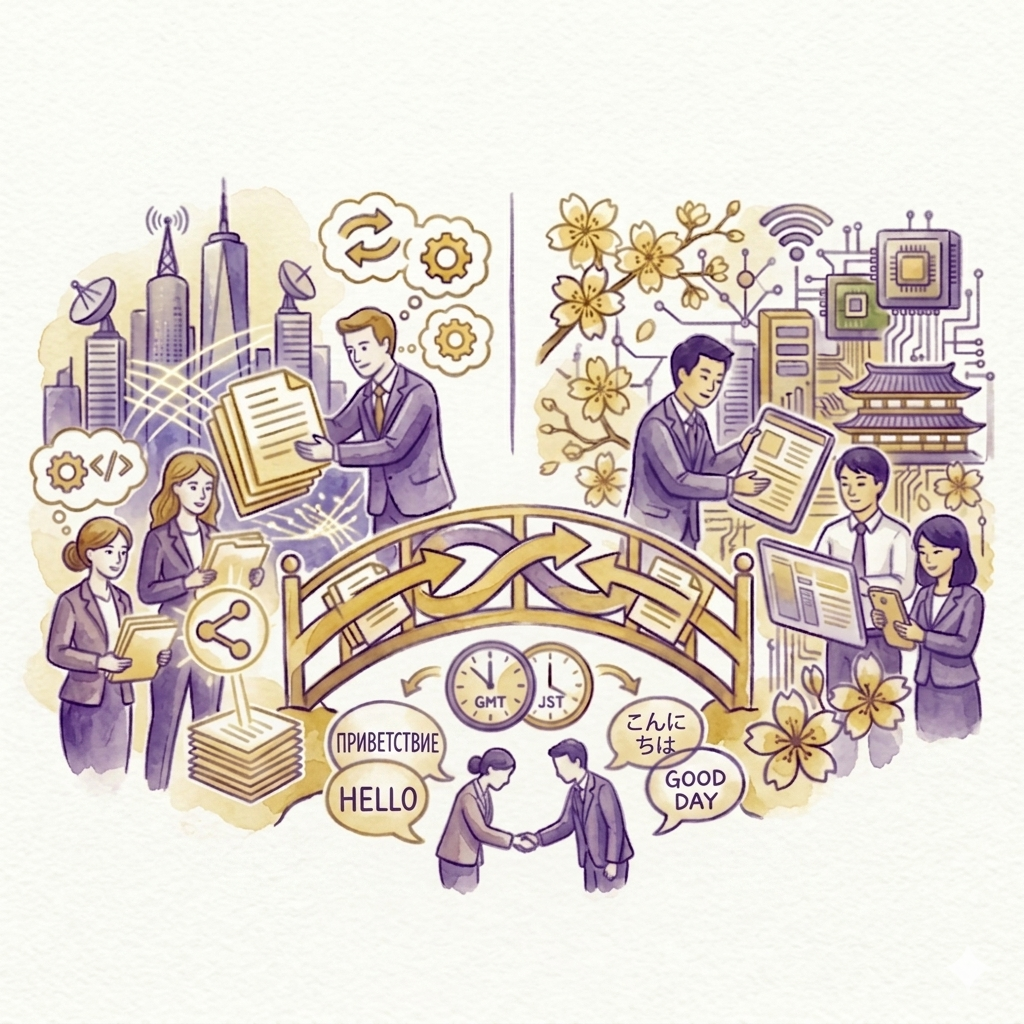
The Japanese market was handled through a local partner brand. As part of their agreement, the partner was responsible for providing Japanese-language versions of all knowledge base content.
We used Oracle CX Knowledge for our KMS, while the Japanese partner worked in their own TMS (Translation Management System — software that manages the process of sending content for translation and receiving it back). The two systems had no API integration (an automated connection that lets software exchange data without anyone doing it manually), so every update had to be transferred by hand.
With a fully manual process, keeping the two versions in sync was an ongoing challenge. Content would sometimes drift out of sync — meaning the English source had been updated, but the Japanese version hadn't caught up yet. Coordinating on changes took real time from both teams.
There were also cross-cultural differences in how the two teams communicated — in pace, in how feedback was given, and in how decisions got made. These are normal things to navigate in international collaboration, but they did affect how long it took to agree on process changes.
What I Did
I ran regular meetings with the Japanese partner team to check on the current workflow, spot any content that had drifted out of sync, and suggest improvements.
When I inherited the workflow, weekly sync meetings regularly ran over one hour — with long pauses while the partner team discussed internally and processed action items. By gradually moving parts of the discussion to async email exchange and making the agenda more structured, the meetings got shorter over time and eventually became unnecessary. Over approximately ten months, the workflow reached a point where it ran smoothly without regular check-ins.
Lessons Learned
Working across cultures meant adjusting how I communicated. I framed feedback as observations rather than corrections; gave the partner team time to review and reach their own consensus before expecting an answer, and wrote everything as precisely as possible to reduce translation ambiguity — because the written text is much easier to translate and process than live speech in a foreign language. These habits have stayed with me and shaped how I approach cross-team communication generally.